
"rainy day plans"
100 article(s) found
![Yunnan Coffee Origin Plan] Why did Qianjie Coffee choose the most difficult road?](https://world.gafei.com/uploads/allimg/180624/3-1P624213J11I.jpg)
Yunnan Coffee Origin Plan] Why did Qianjie Coffee choose the most difficult road?
Professional coffee knowledge exchange more coffee bean information please follow the coffee workshop (Wechat official account cafe_style) to check the weather forecast on the mobile phone. Two days later, for more than a week, it was rainy in Yunnan, and the editor embarked on the road he had often visited in the past few years, planting the second batch of Arabica coffee. In the past few days in Yunnan, I came into contact with several acquaintance farmers, they

How does the caking of coffee powder affect the effect of humidity on coffee extraction? is the coffee powder coarse or fine in rainy days?
With the continuous drizzle in recent days, Guangzhou has officially ushered in spring. Recently, there is a small partner private channel, how to adjust the Italian production in rainy days? So this issue of baristas will tell you how to deal with Qianjie, hoping to help you. What will be the effect of rainy days? Some friends who do not understand but think this is very powerful may think that sunny and rainy days are not very common, so why should they?

Tasting and Evaluation of Guatemala Fine Coffee Bean
Guatemala is one of the most important coffee-producing countries in Central America. The mountains in Guatemala extend for a long time, and the regional climate varies from one place to another. Therefore, eight coffee-producing areas in Guatemala are created. They are all located on the highland terrain with subtropical climate. The rainfall is abundant and stable. The fertile volcanic ash soil is the perfect environment for coffee trees to grow. [Plan del Guayabo] Located in Volcn de Suchitn Volcano

Technical rules for cultivation of small seed Coffee basic knowledge of Coffee
1 scope this part stipulates the technical methods of small seed coffee garden selection, planning, reclamation, seeds, seedlings, planting, soil management and coffee tree management. This part is suitable for the cultivation of small seed coffee. 2 normative citation documents the provisions of the following documents become the provisions of this part through the citation of this section. For all dated reference documents, all subsequent revisions

Climate for the cultivation of Malaba Coffee in Southern Rwanda
Malaba Coffee grows in southern Rwanda, about 12 kilometers (7 miles) from the city of Butare and 150 kilometers (93 miles) from the capital, Gejali. The plan began in the Malaba area of Butare province, but was taken over by a local government organization in 2006, which is now part of the Huye district of the southern province. Due to its proximity to the East African Rift Valley and the Neuenway Forest Mountains, the terrain
Geo-climatic production process of coffee in Rwanda
Maraba Coffee, the geographic and climatic editor, is grown in southern Rwanda, about 12km (7 miles) from the city of Butare and 150km (93 miles) from the capital, Gejali. The plan began in the Malaba area of Butare province, but was taken over by a local government organization in 2006, which is now part of the Huye district of the southern province. Due to its proximity to the East African Rift Valley and Neuenweisen,

Geo-climatic production process of coffee in Rwanda
Malaba Coffee grows in southern Rwanda, about 12 kilometers (7 miles) from the city of Butare and 150 kilometers (93 miles) from the capital, Gejali. The plan began in the Malaba area of Butare province, but was taken over by a local government organization in 2006, which is now part of the Huye district of the southern province. Due to its proximity to the East African Rift Valley and the Neuenway Forest Mountains, this area has many topography.

Malaba Coffee from Coffee producing areas in Southern Rwanda
Grows in southern Rwanda, about 12 km (7 miles) from the city of Butare and 150 km (93 miles) from the capital, Gejali. The plan began in the Malaba area of Butare province, but was taken over by a local government organization in 2006, which is now part of the Huye district of the southern province. Due to its proximity to the East African Rift Valley and the Neuenway Forest Mountains, the terrain is sloping and steep.

What is the use of the Colombian microbatch program? Introduction of Coffee producing areas in Colombia
For more information on coffee beans, please follow the Coffee Workshop (Wechat official account cafe_style) Columbia Micro-batch small Farmer Program, which offers coffee farmers from several of Colombia's best producing areas including Huila, Narino, Cauca, Tolima, etc., unlike many coffee farmers who grow Castillo varieties, small farmers plan to widely choose to grow Bourbon, Typ.
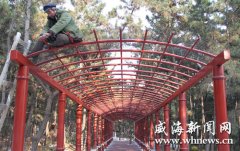
Linhai Park: "Coffee House" Built in Pine Forest
Linhai Park under planning covers an area of 167,000 square meters, among which the forest leisure area includes coffee houses, wooden landscape pavilions, etc., where you can enjoy the natural beauty while feeling as if you are in a natural oxygen bar.

Southern part of Malaba Coffee production area, a coffee variety from Rwanda
Malaba Coffee grows in southern Rwanda, about 12 kilometers (7 miles) from the city of Butare and 150 kilometers (93 miles) from the capital, Gejali. The plan began in the Malaba area of Butare province, but was taken over by a local government organization in 2006, which is now part of the Huye district of the southern province. Due to its proximity to the East African Rift Valley and the Neuenway Forest Mountains, the terrain

Introduction of Lutesilo producing area in the western province of Malaba Coffee Chimel Manor, Rwanda
Malaba Coffee grows in southern Rwanda, about 12 kilometers (7 miles) from the city of Butare and 150 kilometers (93 miles) from the capital, Gejali. The plan began in the Malaba area of Butare province, but was taken over by a local government organization in 2006, which is now part of the Huye district of the southern province. Due to its proximity to the East African Rift Valley and the Neuenway Forest Mountains, the terrain

A brief introduction to the flavor, taste and aroma characteristics of Katim boutique coffee beans suitable for deep baking
Coffee is a semi-shaded tree species, it is recommended to establish a moderate shade degree of 3040%. In the site environment of growing coffee in our province, it is generally difficult to solve the problem of water conservancy and irrigation. the water season is in the dry season, and it is also the season to compete with other crops for water. It is not easy to rely on irrigation to meet the water demand in the coffee field. It is necessary to loosen the soil in time after the end of the rainy season and adopt dead objects on the ground.

Geo-climatic production process of coffee in Rwanda
Malaba Coffee grows in southern Rwanda, about 12 kilometers (7 miles) from the city of Butare and 150 kilometers (93 miles) from the capital, Gejali. The plan began in the Malaba area of Butare province, but was taken over by a local government organization in 2006, which is now part of the Huye district of the southern province. Due to its proximity to the East African Rift Valley and the Neuenway Forest Mountains, the terrain

Characteristics of coffee flavor and taste of Malaba coffee in Rwanda introduction to Chimeier Manor in manor producing area
Rwanda has many mountains and is known as the country of a thousand hills. The whole country is at a high altitude: the lowest point, the Luzizi River, is also 950 meters above sea level. The Midwest is dominated by mountains, which are part of the Aberdeen Rift Valley, which is part of the East African Rift Valley, extending from north to south along the western border of Rwanda. The highest mountain in the country is located in the northwest of Wei.

Introduction to the characteristics of Rwandan Coffee beans in Rwanda Coffee Flavor Manor area
Malaba Coffee grows in southern Rwanda, about 12 kilometers (7 miles) from the city of Butare and 150 kilometers (93 miles) from the capital, Gejali. The plan began in the Malaba area of Butare province, but was taken over by a local government organization in 2006, which is now part of the Huye district of the southern province. Due to its proximity to the East African Rift Valley and the Neuenway Forest Mountains, the terrain

Introduction of Rwanda Coffee varieties Malaba Coffee Chimeier Manor
Laba Coffee is grown in southern Rwanda, about 12 kilometers (7 miles) from the city of Butare and 150 kilometers (93 miles) from the capital, Gejali. The plan began in the Malaba area of Butare province, but was taken over by a local government organization in 2006, which is now part of the Huye district of the southern province. Due to its proximity to the East African Rift Valley and the Neuenway Forest Mountains, this area has many topography.

Geo-climatic production process of coffee beans in Rwanda
Malaba Coffee grows in southern Rwanda, about 12 kilometers (7 miles) from the city of Butare and 150 kilometers (93 miles) from the capital, Gejali. The plan began in the Malaba area of Butare province, but was taken over by a local government organization in 2006, which is now part of the Huye district of the southern province. Due to its proximity to the East African Rift Valley and the Neuenway Forest Mountains, the terrain

Taste of Rwanda boutique coffee beans Malaba coffee is introduced in the manor area.
Malaba Coffee grows in southern Rwanda, about 12 kilometers (7 miles) from the city of Butare and 150 kilometers (93 miles) from the capital, Gejali. The plan began in the Malaba area of Butare province, but was taken over by a local government organization in 2006, which is now part of the Huye district of the southern province. Due to its proximity to the East African Rift Valley and the Neuenway Forest Mountains, the terrain

Growing in the Lutesilo region of the western province of Malaba in southern Rwanda
Malaba Coffee grows in southern Rwanda, about 12 kilometers (7 miles) from the city of Butare and 150 kilometers (93 miles) from the capital, Gejali. The plan began in the Malaba area of Butare province, but was taken over by a local government organization in 2006, which is now part of the Huye district of the southern province. Due to its proximity to the East African Rift Valley and the Neuenway Forest Mountains, the terrain